Capt. Gordon Botkin, aboard the Miss Delta in the Fraser River near Vancouver, is helping researchers study the sockeye salmon population. The MSC recently certified sockeye as "sustainable," even though scientists argue that their population is declining.
Brett Beadle for NPR

Capt. Gordon Botkin, aboard the Miss Delta in the Fraser River near Vancouver, is helping researchers study the sockeye salmon population. The MSC recently certified sockeye as "sustainable," even though scientists argue that their population is declining.Brett Beadle for NPR
Part two of a three-part series by Daniel Zwerdling and Margot Williams.
Next time you walk up to the seafood counter, look for products labeled with a blue fish, a check mark, and the words "Certified Sustainable Seafood MSC." Then ask yourself, "What does this label mean?"
The MSC — Marine Stewardship Council — says that the "sustainable" label means that fishermen caught the seafood with methods that don't deplete its supply, and help protect the environment in the waters where it was caught.
But many environmentalists who have studied the MSC system say that label is misleading. "We're not getting what we think we're getting," says Susanna Fuller, co-director of marine programs at Canada's Ecology Action Centre. She says the consumer, when purchasing seafood with the blue MSC label, is "not buying something that's sustainable now."
If the label were accurate, Fuller says, it would include what she says is troubling fine print: The MSC system has certified most fisheries with "conditions." Those conditions spell out that the fishermen will have to change the way they operate or study how their methods are affecting the environment — or both. But they have years to comply with those conditions after the fisheries have already been certified sustainable.
Gerry Leape, an oceans specialist who sits on the MSC's advisory Stakeholder Council on behalf of the Pew Charitable Trusts, says the MSC's policy is baffling. "It's misleading," he says, "to put a label of sustainability on a product where you still don't have the basic requirements."
Rupert Howes is CEO of the Marine Stewardship Council. He says that the MSC has set up its certification system to be as objective, scientific and independent as possible.
Courtesy of Marine Stewardship Council

Rupert Howes is CEO of the Marine Stewardship Council. He says that the MSC has set up its certification system to be as objective, scientific and independent as possible.Courtesy of Marine Stewardship Council
Representatives from major foundations and environmental groups have repeatedly asked the MSC's board of directors to change its label. As long ago as February 2004, more than two dozen representatives drafted a list of urgent reforms that they said the MSC needed to carry out to establish "credibility." One of those reforms says the "MSC should remove the word sustainable from its claim." Environmentalists have continued to pressure the MSC to label seafood with positive but vaguer terms — proclaiming, for example, that the products come from fisheries that are "well managed" or use "best practices."
But MSC executives have refused to change their label. Rupert Howes, the MSC's chief executive, says even though most fisheries have conditions, the sustainable label "means people can go on catching" that seafood knowing that "they can be confident they can continue doing that into the future, as will their children."
Howes says, "If I see that logo, I've got assurance that the seafood products or fish that I'm buying with that label has come from a well-managed sustainable fishery."
The debate swirling around the MSC and "sustainable" seafood echoes the debates about other industry programs that promise to protect the environment, from organic farming to energy-efficient appliances. Are the promises genuine or hype?
Since it was founded in 1997, the MSC has become the most influential organization in the world that tells consumers which seafood is supposed to be good or bad for the environment. Today, MSC-certified fisheries account for roughly 8 percent of the world's seafood catch, worth more than $3 billion, according to the MSC website.
Howes and the MSC's supporters say the organization has helped push fishing companies to use better, more ecologically sound methods. Many environmentalists and scientists agree that the MSC has made progress, but they say it's deceiving consumers into thinking that the choices they make at the market have a bigger impact than they really do. And consumers are often paying more when they make that choice. Industry executives say MSC-labeled seafood often costs more than other products.
Mike Donaldson takes scale samples from a sockeye salmon as part of research for the Pacific Salmon Commission. The commission is a joint body formed by the U.S. and Canadian governments to conserve, manage and encourage production of Pacific salmon.
Brett Beadle for NPR

Mike Donaldson takes scale samples from a sockeye salmon as part of research for the Pacific Salmon Commission. The commission is a joint body formed by the U.S. and Canadian governments to conserve, manage and encourage production of Pacific salmon.Brett Beadle for NPR
Case Study: The Fraser River Sockeye Salmon
To see how those perspectives clash, consider the battle over sockeye salmon from the Fraser River in British Columbia, Canada. The Fraser River is one of the world's most important sources of wild salmon — and sockeye are one of the most economically valuable species. Chefs love sockeye's texture and flavor. The fish generate thousands of jobs in the fishing and processing industries. They're a valuable export. And Fraser River sockeye are an important food and ceremonial symbol for Canada's First Nations, or native tribes.
So it was international news in late 2009 when government researchers reported that the Fraser's sockeye population had collapsed. Scientists predicted that almost 11 million sockeye would return from the ocean that year and fight their way back upstream to reproduce. Studies suggested that fewer than 2 million actually came back.
The population of Fraser River sockeye has zigzagged like an EKG since humans began keeping track, but their average productivity has steadily declined since the early 1990s. When the population went into free fall, Canada's leaders formed a commission to investigate.
Canadian officials appointed a Supreme Court judge, Bruce Cohen, to lead the Commission of Inquiry into the Decline of Sockeye Salmon in the Fraser River. They gave him the power to subpoena documents and witnesses, and the power to compel them to testify under oath. By their own count, the commission staff would eventually end up calling 170 witnesses to testify during 133 days of hearings. They pored through thousands of pages of studies, reports and government documents — some of them previously secret.
So many researchers were stunned when the MSC made an announcement just after the Cohen commission started its investigation: The MSC would label sockeye from the Fraser River "certified sustainable seafood." Industry leaders said they needed the label to sell Canadian sockeye in Europe, where supermarket chains were demanding sustainable-labeled products.
"Here we are, seeing this precipitous decline in Fraser sockeye, and then this crash, absolute crash," says Craig Orr, executive director of Watershed Watch, a prominent Canadian conservation group. "And then you have [the MSC] coming in on behalf of the commercial fishing industry saying that the Fraser River sockeye industry is certifiably sustainable. You know, it just didn't seem to make sense."
Conditions Allow Sockeye Approval
A sockeye salmon that was caught from the research vessel Miss Delta off the coast of Vancouver is examined. The MSC has certified the fish as "sustainable" even though there is concern from scientists and environmentalists.
Brett Beadle for NPR

A sockeye salmon that was caught from the research vessel Miss Delta off the coast of Vancouver is examined. The MSC has certified the fish as "sustainable" even though there is concern from scientists and environmentalists.Brett Beadle for NPR
Orr says to see why it doesn't make sense, read the list of more than two dozen conditions that the Fraser River sockeye industry has to meet under the MSC's rules. Some of those conditions require the salmon industry and Canadian government's fisheries department to conduct basic research on sockeye salmon — research that critics say should have been done long ago.
For example, scientists say there are roughly 30 different kinds of sockeye, or stocks, caught in Canada's Fraser River. Studies show that while some appear to be in good shape, several species have been declining dramatically. The International Union for Conservation of Nature has "red listed" some of them because they are "threatened." Yet the certification team from the firm that evaluated the fishery for the MSC, Intertek Moody Marine, acknowledged that nobody had studied those salmon stocks enough to understand exactly how the industry is affecting them.
Many scientists and environmentalists argue that the MSC should require fisheries to gather crucial evidence and then apply for its label. Instead, the MSC will allow the fishing industry to certify Fraser River sockeye as sustainable for at least five years, while the industry and government gather that evidence — and meet other conditions.
Evidence suggests, however, that the fishing companies that catch sockeye have not been living up to their promises. Under the MSC's rules, every fishery that's certified must hire a commercial auditing company to check annually to see if it's meeting the conditions on time. After its 2012 audit of Fraser River sockeye, Intertek Moody reported that the fishing industry had failed to meet more than half of the 30-plus conditions attached to it. Yet MSC still allows the industry to label the sockeye sustainable.
Surveys of fisheries labeled "certified sustainable," including one conducted for the MSC, show that many fisheries fail to meet their conditions — at least not on schedule.
'Sustainable Word Is Fraught With Difficulty'
Take a look at scallops from eastern Canada, which were certified by the MSC system in 2010 — with conditions. The labels don't tell consumers that the fishing industry harvests most of those scallops by dredging, a method of dragging giant rakes across the ocean floor.
Some environmental groups argue that the MSC should flatly refuse to label any seafood sustainable if it is harvested with dredges. Studies show that using dredges can cause drastic changes in the ocean, disrupting the balance of species in the water and transforming the ocean floor.
MSC executives counter that some boats can dredge carefully, without causing serious damage. So they agreed to label Canadian scallops sustainable with conditions. The fishing companies will have to study how their use of dredges off Canada's coast impacts the environment.
Fuller says that's backward — like telling a child, "You've been really bad, but I'll give you a lollipop, and then I want you to show me how much better you can be," she says. "It just doesn't work, right? You've already got the lollipop."
"The sustainable word is fraught with difficulty, undoubtedly," says the MSC's Howes. "We keep coming back to the science." He adds, "Each unique fishery has been assessed by those scientists. It has met the [MSC] standard, and they have deemed the amount of data that is available is sufficient to enable them to make that decision."
And Howes says the system of granting conditions is one of the main strategies for protecting the oceans. By requiring fisheries to meet conditions, the MSC system is providing incentives for them to do better. Howes says "expectations of perfection" could obscure "the good that is undoubtedly happening."
Executives at supermarket chains that sell MSC-labeled seafood have been watching with a mixture of confidence and concern as controversies like these unfold. Carrie Brownstein, who oversees Whole Foods' seafood quality standards, says she is confident in the MSC system of evaluating and certifying fisheries.
"I don't think there's a program out there in the world, no matter whether they're working on seafood, or they're working on makeup or shampoo, that doesn't have some people that are extremely happy with what they do and some people that aren't," she says. "We watch the process, and we're trusting this process."
But Bob Fields, a senior buyer for Wal-Mart and Sam's Club, says he and his colleagues have decided not to carry some products with the MSC label because environmental and other groups have convinced Wal-Mart they are fraught with potential problems. One of them is the so-called Chilean sea bass, or toothfish. Fields says Wal-Mart will "just back completely away," from MSC products on a case-by-case basis, if they're convinced it's too risky.
In late 2012, Canada's Commission of Inquiry into the Decline of Sockeye Salmon in the Fraser River released its final report, after a roughly two-year investigation. The commission concluded that there's no single cause that explains their "two-decade decline."
Instead, the commission concluded that "sockeye experience multiple stressors" that can damage their health and kill them — possibly including the boom in salmon farming along their migration route, climate change and pollution. And the commission warned that unless the government and industry follow its long list of recommendations, the plight of Fraser River sockeye could get worse.
Despite the report, the MSC still says sockeye salmon from the Fraser River are certified sustainable.
Researcher Barbara Van Woerkom contributed to this story.
View the original article here
 In photo from the Solar and Heliospheric Observatory, a major solar eruption is shown in progress Oct. 29, 2003. A large coronal mass ejection is being hurled toward the Earth.NASA/Getty Images
  Most of the metals you encounter are alloys or a mixture of metals. Usually metals are alloyed to make a product with qualities superior to pure elements. For example, you may think it would be nice to use pure gold or silver as silverware, but these elements are very soft, easily bent, and easily scratched. Most silverware is the alloy stainless steel, because it is strong and easy to keep clean, or sometimes the alloy sterling silver, which is more durable than pure silver.
  Romance is all about chemistry, right? Valentine's Day is February 14th, so you've still got time to find a great gift for your sweetie and impress him or her with your holiday knowledge. Here's some Valentine's Day chemistry content to help you out: Vanishing Valentine Demo - Make a chemical solution go from blue to pink to clear. Hot and Cold Valentine - A chemical solution goes from colorless to hot pink! Crystal Heart - Grow a crystal heart as a decoration or gift. Gallium Beating Heart - It's like the mercury beating heart chemistry demo, except it's not toxic! How Mood Rings Work - Can a mood ring tell if you're feeling passion? Gifts Science Geeks Can Make - Hint: fizzy baths bombs tend to be a better gift for this particular holiday than glow-in-the-dark slime. Of course, colored fire is good for every holiday... Is There really a 'Chemistry of Love'? - If you don't know the answer, then this FAQ is for you. Make Colored Flowers - Flowers are a traditional Valentine's Day gift. You can color your flowers for your Valentine yourself. Make a Floral Preservative - Keep your Valentine's Day flowers beautiful longer. Actually, there are many easy recipes for making cut flower preservative. Paper Chromatography with Flower Petals - Unless you're giving silk flowers, they won't last forever, even if you use a floral preservative. If your Valentine is into chemistry, then include instructions for how to separate out plant pigments with your roses in addition to a sweet card. Make Perfume - Perfume is a romantic gift. If you apply your command of chemistry, you can make a signature scent, which is a personal and meaningful gift. Jacobson's Organ & the Sixth Sense - Do humans respond to pheromones? Chemistry of Diamond - Learn about the properties of this popular gift choice. Grow a Silver Crystal - Are you up for a challenge? A silver crystal dangling from a silver chain is a thing of beauty. It takes some time and skill to grow a large crystal, so if this is something that interests you, start growing your crystal early. Jewelry Chemistry - Learn about crystals, gems, and precious metals. Theobromine Chemistry - Chocolate is the 'food of the gods' (and well-liked by Valentine goddesses, too). if(zs>0){if(zSbL250)gEI("spacer").style.height=Math.floor(e[0].height/12)+17.5+'em';else{var zIClns=[];function walkup(e){if(e.className!='entry'){if(e.nodeName=='A'||e.style.styleFloat=='right'||e.style.cssFloat=='right'||e.align=='right'||e.align=='left'||e.className=='alignright'||e.className=='alignleft')zIClns.push(e);walkup(e.parentNode)}}walkup(e[0]);if(zIClns.length){node=zIClns[zIClns.length-1];var clone=node.cloneNode(true);node.parentNode.removeChild(node);getElementsByClassName("entry",gEI("articlebody"))[0].insertBefore(clone,gEI("spacer"))}}}};zSB(2);zSbL=0
 How do you pass a chemistry test? Of course, the most important step is to study for the test! Yet, you may have studied for a test, felt like you were going to ace it, and then gotten a big fat "F" on the returned exam. Okay, maybe it was just a "C" or a "D", but my point is: you didn't do as well as you thought you would. Do you know why? It likely had to do with the way you took the test. Chemistry tests usually a mixed bag of memorization, understanding the concepts, and working problems. It can greatly help your grade to go into the test with a test-taking strategy... Here's what you doif(zs>0){if(zSbL250)gEI("spacer").style.height=Math.floor(e[0].height/12)+17.5+'em';else{var zIClns=[];function walkup(e){if(e.className!='entry'){if(e.nodeName=='A'||e.style.styleFloat=='right'||e.style.cssFloat=='right'||e.align=='right'||e.align=='left'||e.className=='alignright'||e.className=='alignleft')zIClns.push(e);walkup(e.parentNode)}}walkup(e[0]);if(zIClns.length){node=zIClns[zIClns.length-1];var clone=node.cloneNode(true);node.parentNode.removeChild(node);getElementsByClassName("entry",gEI("articlebody"))[0].insertBefore(clone,gEI("spacer"))}}}};zSB(2);zSbL=0
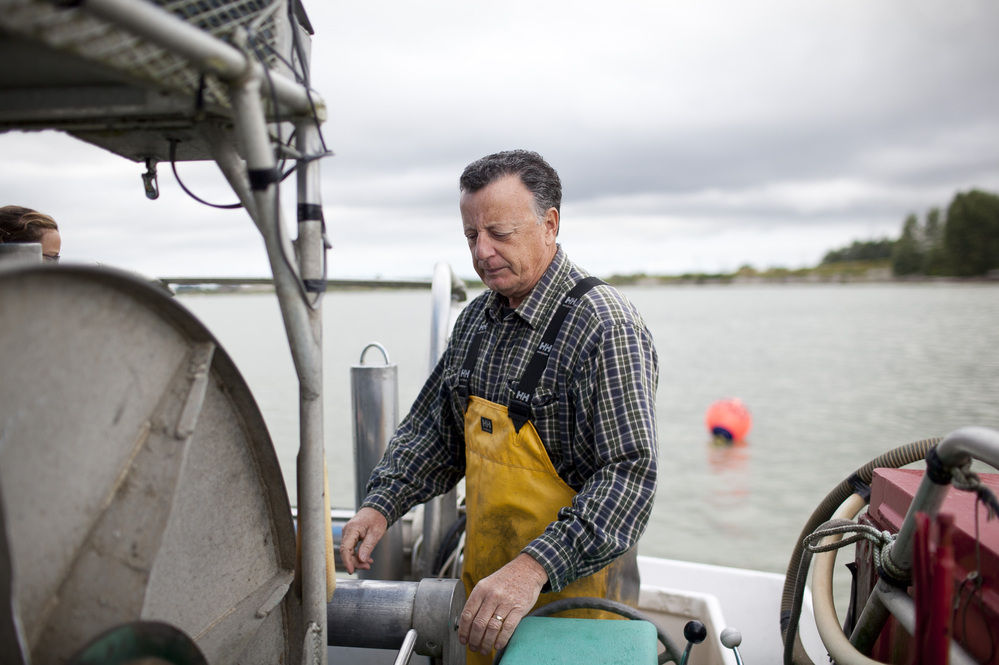 Capt. Gordon Botkin, aboard the Miss Delta in the Fraser River near Vancouver, is helping researchers study the sockeye salmon population. The MSC recently certified sockeye as "sustainable," even though scientists argue that their population is declining.Brett Beadle for NPR
 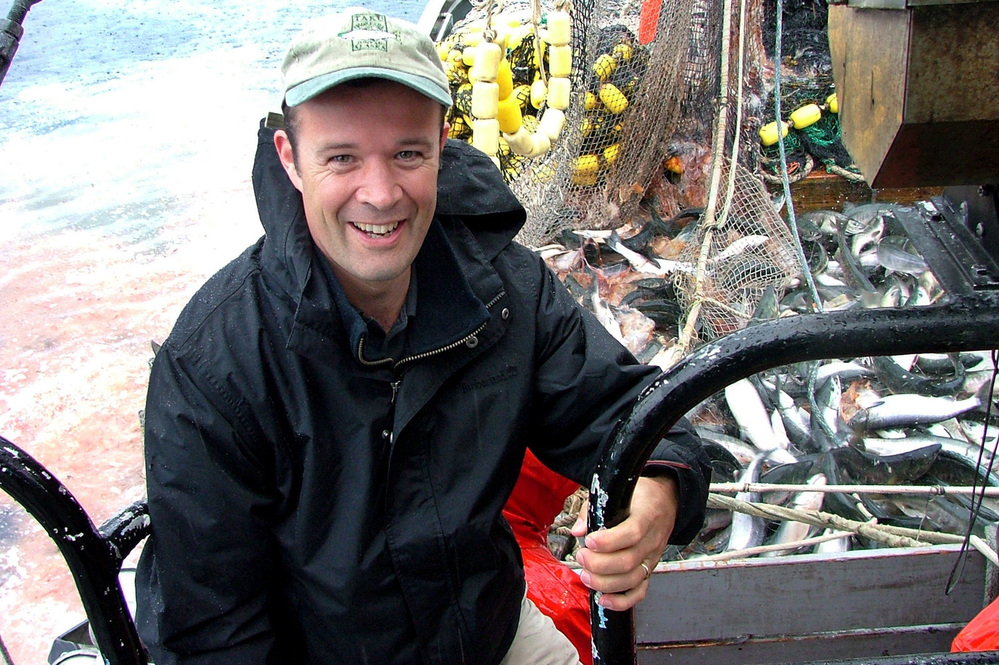 Rupert Howes is CEO of the Marine Stewardship Council. He says that the MSC has set up its certification system to be as objective, scientific and independent as possible.Courtesy of Marine Stewardship Council
 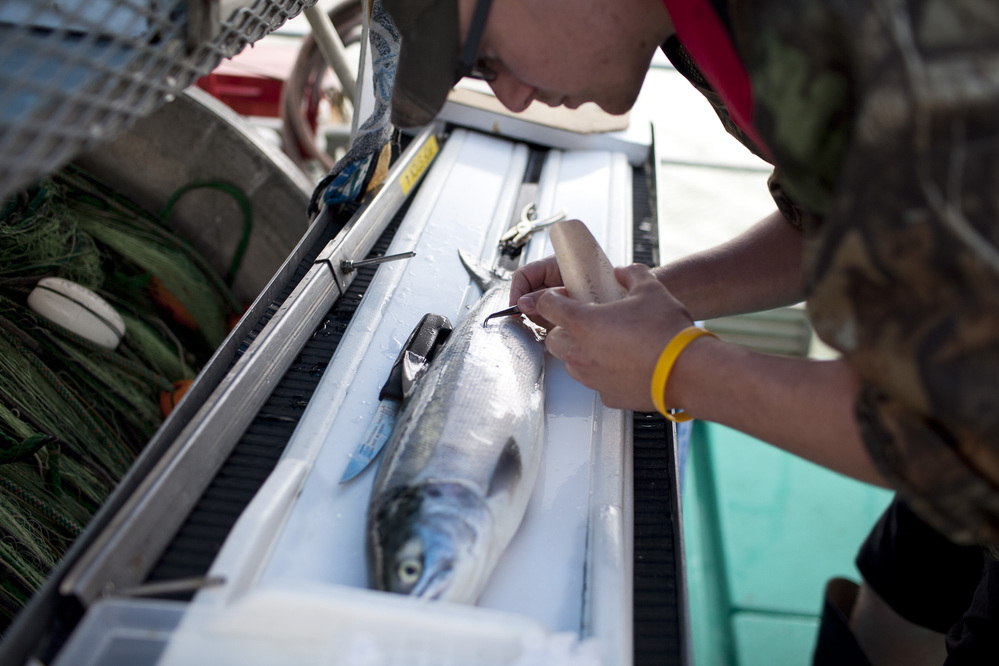 Mike Donaldson takes scale samples from a sockeye salmon as part of research for the Pacific Salmon Commission. The commission is a joint body formed by the U.S. and Canadian governments to conserve, manage and encourage production of Pacific salmon.Brett Beadle for NPR
 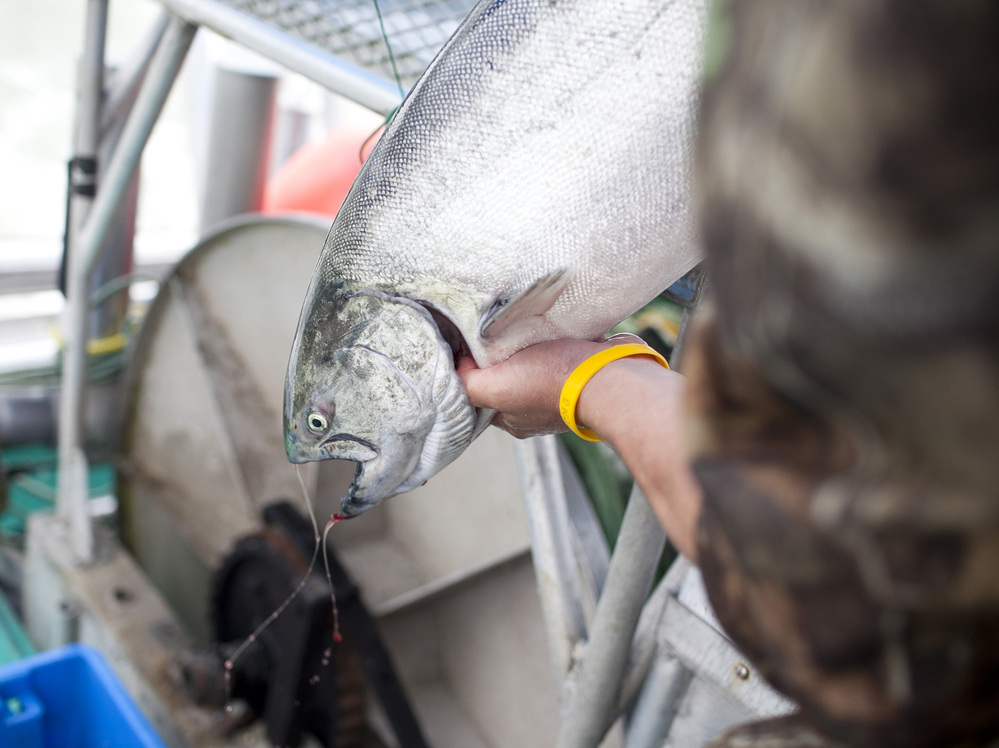 A sockeye salmon that was caught from the research vessel Miss Delta off the coast of Vancouver is examined. The MSC has certified the fish as "sustainable" even though there is concern from scientists and environmentalists.Brett Beadle for NPR
 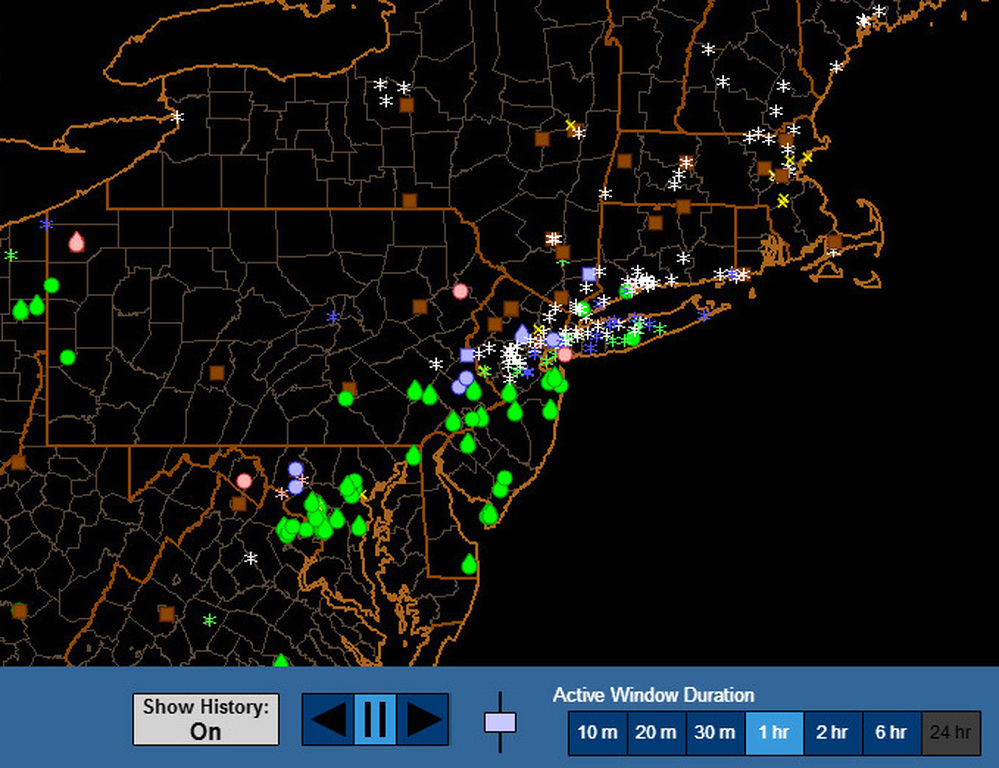 This map shows data reported by users of the mPING app during Friday's blizzard in the Northeast.The PING Project
  The National Oceanic and Atmospheric Administration and the University of Oklahoma's new mPING app helps forecasters capture a better description of falling precipitation.Screengrab of mPING
  The PING project captures data from locals on its app or website. Users are able to choose from different types of precipitation.Screengrab of mPING


